



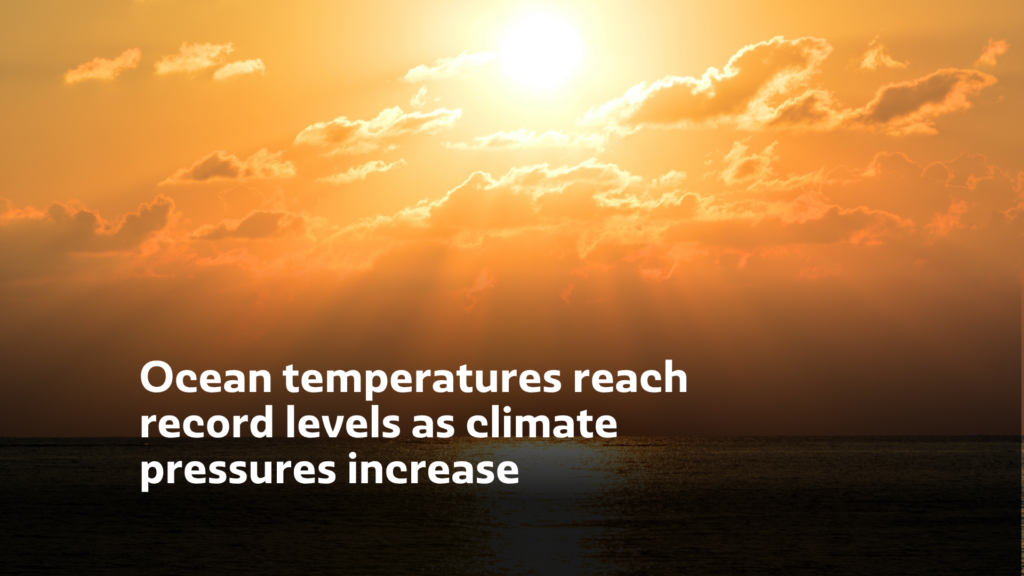
Record ocean temperatures highlight growing impact of climate change
New data from the Copernicus climate service shows that the world’s oceans have reached their highest recorded surface temperatures, with average temperatures outside the polar regions reaching 21.1°C.
Scientists say the current El Niño weather pattern is contributing additional heat, but the record sits within a much longer-term trend driven by human-caused climate change. Oceans absorb more than 90% of the excess heat trapped by greenhouse gas emissions, making rising sea temperatures a key indicator of a changing climate.
Warmer oceans can have wide-ranging impacts, including increasing the intensity of some extreme weather events, contributing to sea level rise and placing greater pressure on marine ecosystems.
The findings are another reminder of the scale of climate change and the importance of reducing emissions across industries and communities.
Read the full story from the BBC >
The natural world inspires so much of what we do, from the way our products are named to the cleaner power we provide. Our climate news looks at some of the wider environmental stories shaping the world around us.
More climate news:
- Indonesia announces ban on elephant rides for tourism
- Scientists discover plastic-eating fungus in the Ecuadorian Amazon
- South Korean scientists develop transparent solar panels that could allow windows to generate electricity
- Canada announces CA$70 billion clean energy package expected to create 23,000 construction jobs