

Powering on-location catering with the NXTGENbps Emperor
Battery power is an increasingly important part of the conversation across film and TV, but productions still want to see how it performs when put to work on location.
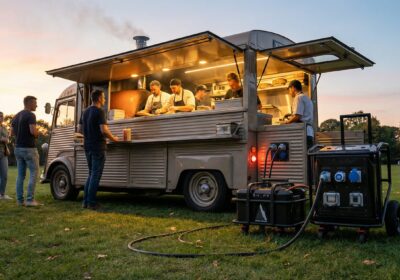
The NXTGENbps Emperor was recently hired by a high-end TV production in central London to power its on-location catering unit across a four-hour service.
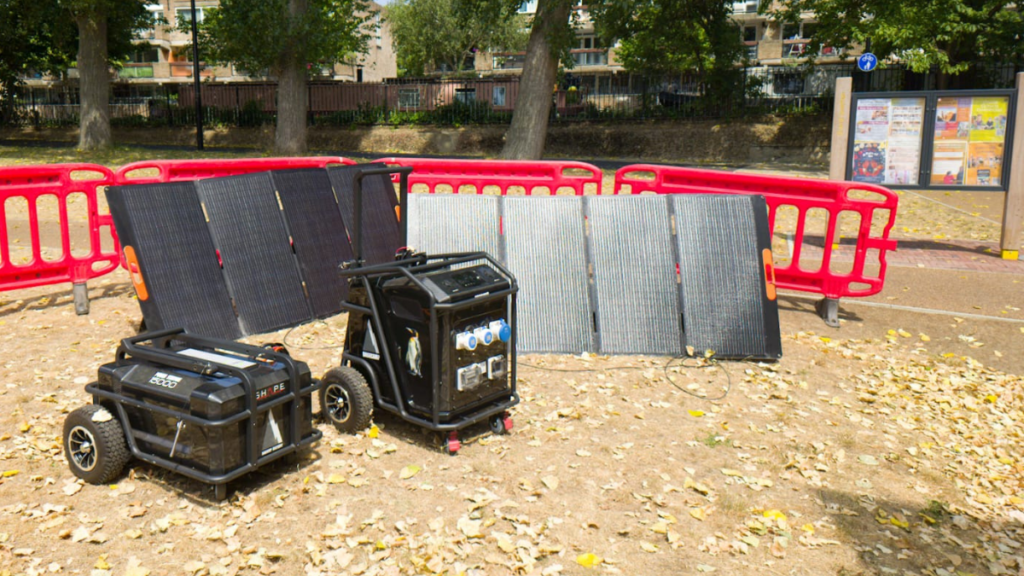
The equipment supplied included:
- One 15kWh Emperor
- One 15kWh Empress expansion unit
- Two 400W folding solar panels
Before leaving NXTGENbps HQ, both battery units were charged to 100% using our solar charging station. They arrived on location fully charged and were able to be wheeled by one person into position ready for the day.
The hire gave us a clear picture of how the setup performed across the service, from the initial power demand and ongoing solar input to the capacity remaining at the end. It also showed the positive difference battery power can make for on-location catering, both in terms of the crew environment and the practicalities of the setup.
Putting the Emperor to work
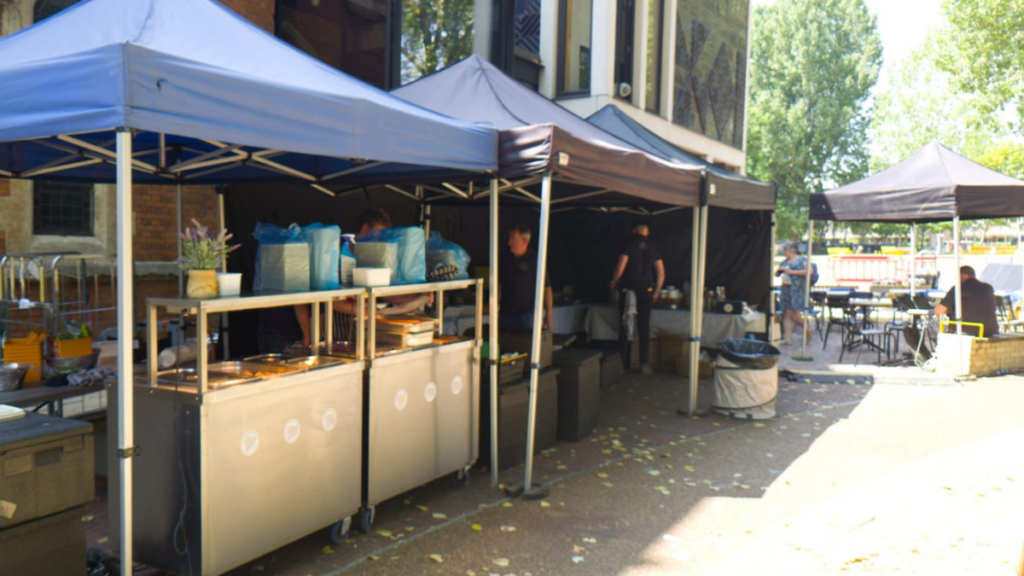
The batteries were used to power four bain-maries and two hot cupboards, keeping food warm and ready to serve to the production crew.
The catering equipment was switched on at 11.30am. As everything began heating, the initial power demand peaked at 7.4kW. Once the equipment reached temperature, this settled to an average draw of between 3kW and 4kW.
The initial peak is useful when planning power for catering equipment. Tea urns, hot cupboards and bain-maries draw more power while heating up, before settling to a lower demand once they reach temperature.
Solar input whilst in use
Conditions were very sunny, so the two 400W folding solar panels were positioned to make the most of the available light.
While the catering equipment was running, the panels were feeding an average of approximately 350W back into the system. The solar contribution across the service was estimated at roughly 1kWh, topping up the Emperor while it continued to supply the catering unit.
The results
The catering service finished at 3.30pm, four hours after the equipment was first switched on.
At the end of the service:
- The Emperor still had 67% of its battery capacity remaining
- Around 4.9kWh had been drawn from the Emperor’s stored capacity
- Approximately 1kWh had been contributed directly by the solar panels
- The Empress expansion unit remained on standby, fully charged and ready if needed
In practice, the full catering service was powered by a single Emperor, with plenty of capacity remaining and the Empress still available for a longer day, changing requirements or further use elsewhere on location.
Making a positive change on location
The performance figures tell one part of the story, but the value of battery power was also clear in how the catering area could operate day to day.
With no engine noise or fumes, the power source could be positioned close to the catering equipment without affecting the area where the crew were eating, drinking or taking a break. That kept cable runs shorter, made the setup easier to manage and allowed the catering unit to remain close to the filming location.
The Empress added another layer of flexibility. It remained fully charged and ready if the service ran longer, power demand increased or the production schedule changed. That additional capacity also makes the same setup better suited to extended hires or productions moving between locations, without having to rethink the power provision each time. Plus, solar input continued to top up the Emperor while it was in use, adding renewable energy throughout the service.
For productions, this is where the value of battery power becomes clear: a more sustainable choice that improves the working day rather than complicating it.